Vivint 2025

Helping users understand home activity

With over 350,000 unique users per day, ‘Activity’ is the second most-visited tab in the Vivint app. It logs events from a user’s smart home systems to help them understand activity in and around their homes. This project is a re-imagining of the existing activity feed designed to better serve customer needs.

My role

Lead UX designer

Project type

Product design

Discovery research

Problem

The activity feed was built during the first generation of the Vivint App before user needs for the feed were fully understood or considered.

Proposal

Clarify user goals in the feed and design an experience that helps users accomplish them.

We had a feed... but not a very helpful one

The old feed was full of text walls, thousands of motion detections, and identical thumbnails with no easy way to sort through it all. It was a nightmare to find an event you were looking for, let alone piece together the story of what happened.


The new feed introduces hierarchy, filtering, and scan-ability to support user goals.

Impact & Results

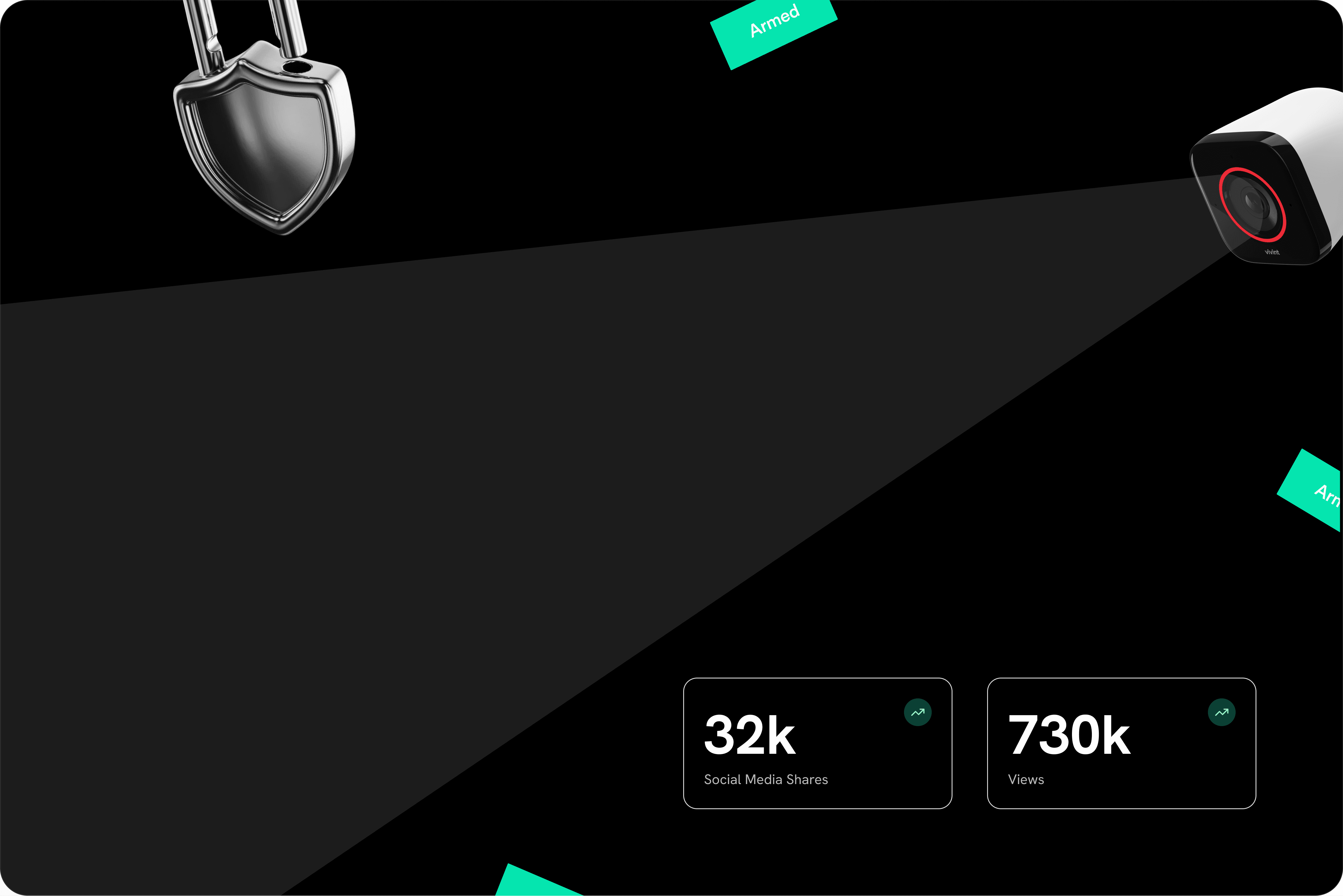
The redesign had a major impact on engagement and stickiness—especially for users who were previously less active. Since less engaged users are 2.5X more likely to attrit, boosting engagement in this group by 75% had an estimated increase of ~$3M in annual revenue.

21%

Increase in feature stickiness

75%

Increase in engagement among less active users

8%

Increase in Daily Active Users

Discovery Research & Insights

Understanding user needs

We began with discovery research to understand the questions users have about activity in their homes. Partnering with the Research and Insights team, I developed discussion guides and led interviews to uncover what activity users want to know about, how they access that information, and their overall experience finding it.

Whimsical concept testing

To explore user thinking, I created a set of “wild” design concepts inspired by our Industrial Design team’s process.


The goal wasn’t to ship them, but to spark conversation and reveal how users understand home activity: do they think about it in space or over time? How much context from other systems do they need?

Insights that shaped the feed

We found 3 high-level tasks customers used the feed for:

Verify

that an event that was supposed to happen, did happen

Explore

general activity in the home

Investigate

details about an event

Product development

Product development

Exploring concepts

Each user story I explored a variety of concepts to address user needs. I took these concepts through reviews with the larger design team to decide on the best approach for each concept

Iterating in phases

Traditionally, Vivint followed a waterfall product development process, even in software development. This project was one of the first to embrace agile- taking small, iterative steps toward a better product. By incorporating real customer feedback along the way, we were able to make informed decisions and deliver value faster.

MVP Release

We started with 3 simple changes to the feed to support users

Explore

De-cluttered events

Filtering out unhelpful events keeps the feed clean and focused on relevant activity.


  • Motion detections

  • HVAC kicking on/off

  • Lights dimmed or turned on/off

Investigate

Verify

Easy filtering

Filtering by date, devices, and commonly investigated events makes it easier for users to find specific events.

Explore

Verify

Investigate

Visual refresh

The new feed features a visual redesign that makes it more functional and beautiful.


  • Icons & touches of color

  • Larger thumbnails

  • More white space

Phase 2: Telling the whole story

The second phase focused on answering questions more directly rather than putting the burden on the user to piece together what happened.

...More Discovery Research & whimsical concept testing

The MV

Phase 2: Event grouping

We started with 3 simple changes to the feed to support users

Investigate

Verify

Grouped events

Related system events are grouped into a cohesive story to directly communicate what happened rather than putting the burden on the user to piece things together.

Investigate

Alarm Summaries

Unrelated, repeated system events now stack to de-clutter the feed while still communicating what happened.

Reflections

What I learned

This project strengthened my ability to lead end-to-end, research-driven design while collaborating across teams and verticals. The biggest challenge was adapting my designs to an agile development process and helping establish this workflow within Vivint.

What I would do differently

This project introduced me to the power of in-production variant testing. We eventually adjusted some design details using data from Mixpanel, but I wish we had done these as tests from the start!

Impact & Results

21%

Increase in feature stickiness

75%

Increase in engagement among less active users

$3M

Estimated annual revenue increase